Mold Questions, Answered Plainly
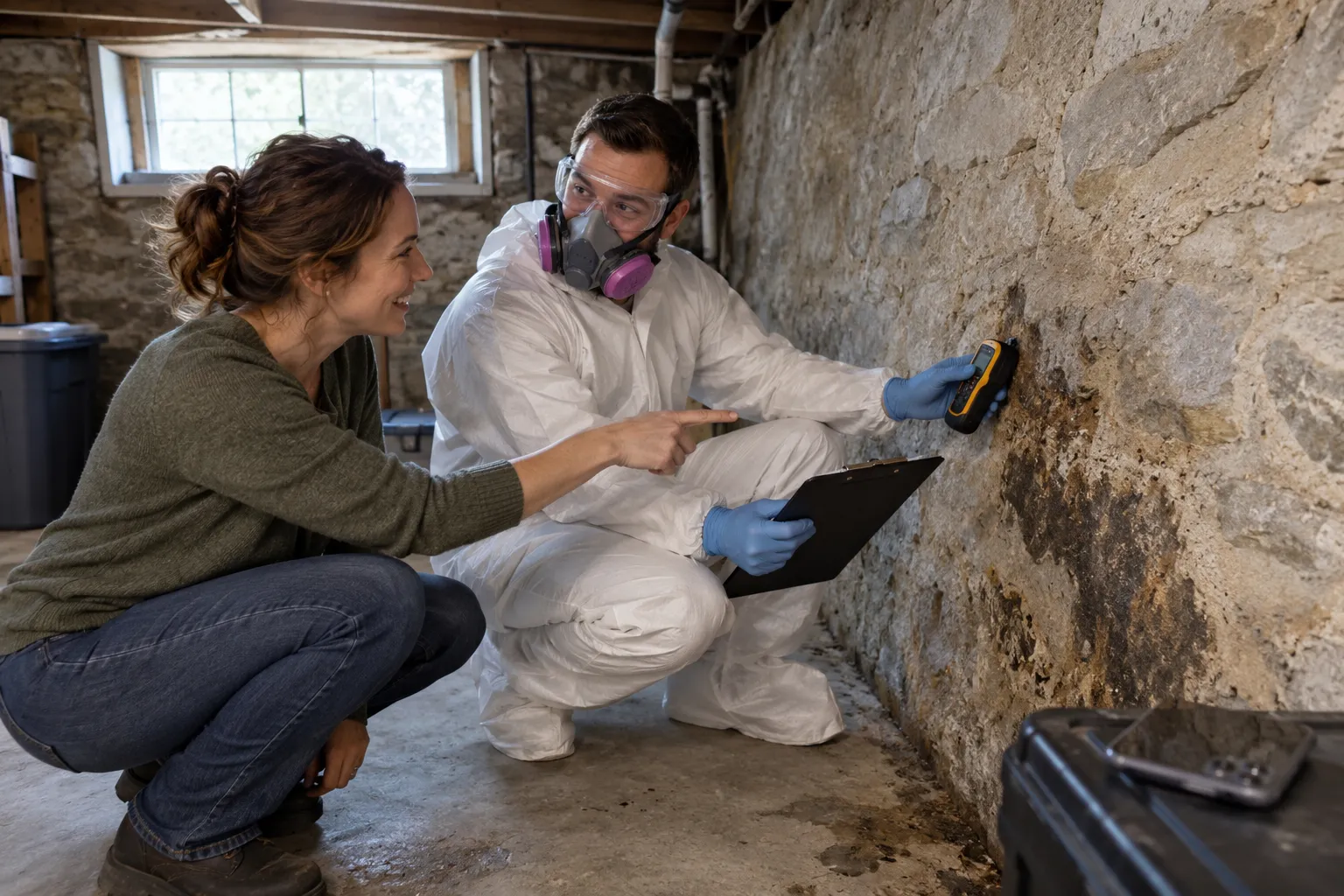
Answers to common questions
Can I clean mold myself?
Sometimes. A small patch on a hard, sealed surface is a fair DIY job. Wear a mask, gloves and goggles. Take photos first. Stop the water that feeds it. Skip DIY if the mold is large, keeps returning, or sits in drywall, insulation or a basement wall. Then ask a local provider. Bleach rarely solves a deeper problem.
How much does residential mold removal cost?
It depends on the job. In the U.S., small, contained jobs often run a few hundred to around $1,500. Larger areas can reach several thousand dollars. Basements and attics cost more. Inspection and testing are usually priced separately. Prices vary by region and scope, so get it in writing and compare more than one quote.
Do I need mold testing before removal?
Not always. If you can see the mold, testing may add little. It helps when you smell mold but see none, after a leak, or when you want a baseline. Ask providers about certified mold testing, and ask who does the testing versus the cleanup.
What happens during mold remediation?
A provider usually starts with a visit and a written scope. Then they seal off the work area and run air filtration. Damaged materials that cannot be cleaned are removed. Surfaces are cleaned and dried. A final check follows. Providers do all of this work. Forgotdescription Mold Help only connects you. Ask for each step in the estimate.
How do I choose a mold inspection provider near me?
Search results for mold inspection near me show many names. Narrow them down. Ask about licensing where your state requires it, and ask about insurance. Request a written scope and price. Be careful if one company wants to test and also remove, and ask why. Ask for references. Never feel rushed into signing anything. Get it in writing.
Will my insurance help pay for mold work?
Maybe. Some policies may cover sudden damage, like a burst pipe. Slow leaks and neglect are often excluded. Check your policy and ask your insurer. Providers can often help document damage for a claim. Your part is records. Take photos before cleanup, write down dates, and keep every receipt and report.
Is black mold worse than other mold?
Color alone does not tell you the type. Black mold gets attention, but any heavy growth needs a fix. The real steps are the same: find the moisture, stop the water, and have a provider remove the growth safely. Ask a local provider about black mold remediation if you see dark patches.
Does the season change when I should act?
Yes. Spring snowmelt pushes water into basements and stone or block foundations. Coastal storms drive rain into walls and roofs. Repeated frost and thaw can open small cracks. Winter closed windows trap damp air. Check basements and attics after heavy weather. If you spot mold, document it and book a visit soon, because delays let it spread.
Request a callback
Tell us what you see, where, and since when. A local provider in our network can follow up with next steps. Request an estimate anytime.
No obligation